Coconut Crabs
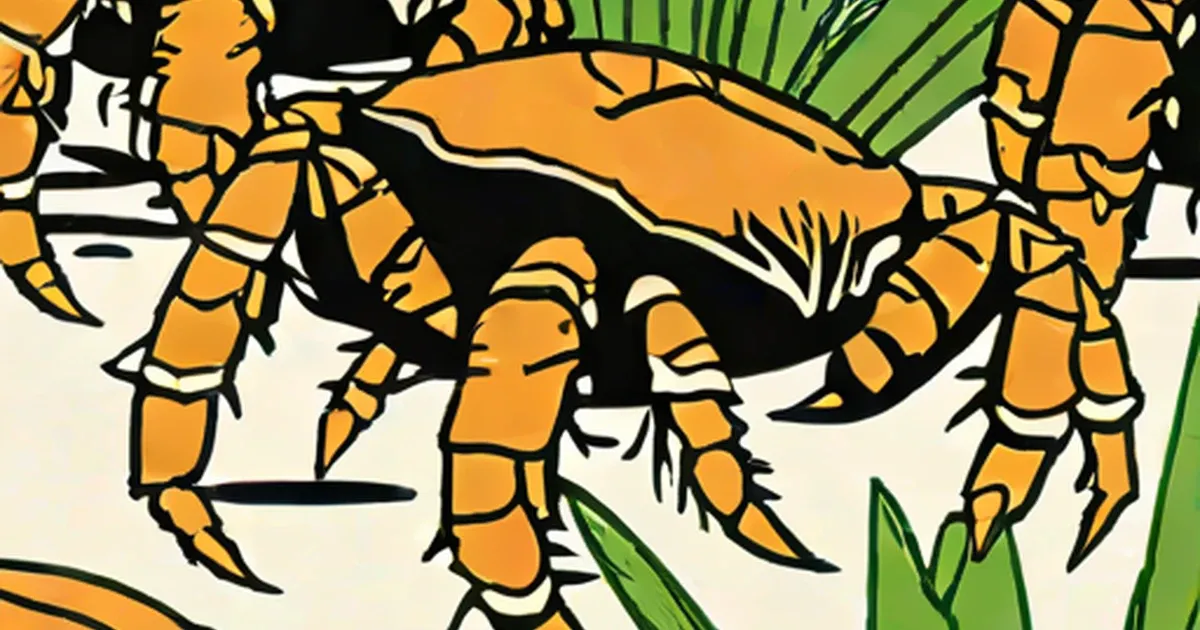
The coconut crab derives its name from the ability to crack coconuts with the help of its strong pincers. Read on to know all about the strange and interesting facts about coconut crabs.
If you are visiting one of the many islands between the Indian and Pacific Ocean and happen to come across what looks like the largest, scariest spider you have ever seen, have no fear — it is not a spider, it is the coconut crab. Don’t be surprised to find that a coconut crab beats you to the best coconut you may have just spotted; these crabs love coconuts as much as we do. Here is a look at coconut crabs and the details of their daily life and behavioral patterns.
Coconut Crabs: Description and Distribution
The coconut crab is a type of hermit crab that can grow to gigantic proportions — the largest terrestrial arthropod in the world. It is also known as the robber crab, palm thief (rumored to have stolen shiny objects such as silverware and pans), terrestrial hermit crab, and locally as ayuyu (on Guam), kaveu or unga (in the Cook Islands); some islanders even call it taotaomo’na, believing it might be an illusion brought about by ancestral spirits. It is the only member of the genus Birgus. Coconut crabs are found around the Indian Ocean and the central Pacific — the Seychelles, Astove Island, Aldabra, the Glorioso Islands and the Andaman and Nicobar Islands among them.
The coconut crab has 8 legs. The front legs carry the large, powerful claws used to husk and open coconuts and to lift heavy objects weighing several pounds; the next two pairs let it climb coconut trees; and the last small pair is used to clean its breathing organs. An adult can have a leg span of 1 m, a body length of up to 40 cm, and weigh around 17 kg on average. Its body color varies with the island where it lives, ranging from orange-red to purple or blue, and males are considerably larger than females. Although most crabs live near and swim in water, the coconut crab cannot swim — even small specimens will drown — so it is thoroughly adapted to life on land.
Two adaptations stand out. First, its stalked red eyes sit above antennae that resemble the smelling organs of insects rather than those of other crabs. Insects and coconut crabs did not evolve together, but both needed to detect odors in the air and so evolved remarkably similar organs; the crab flicks its antennae as insects do and has an excellent sense of smell, detecting rotting meat, bananas and coconuts over great distances. Second, it breathes using a special branchiostegal lung — an organ that works somewhere between gills and lungs. Located at the rear of the thorax, it contains gill-like tissue better suited to absorbing oxygen from air than from water; the crab uses its smallest legs to clean and moisten these organs with seawater, which they require to function, and may also use those legs to transfer salt water to its mouth to drink.
The coconut crab is related to the hermit crab, but only the young use the shells of other creatures to protect their soft-skinned abdomens — sometimes broken coconut shells serve the same purpose, particularly during moulting, a phase that can last around 30 days. Once they reach juvenile status they abandon the shells, and a hard exoskeleton develops over the body, protecting the crab, reducing water loss and continuing to grow with it.
Coconut Crabs: Diet and Food Habits
Coconuts are high on the list of favored foods, and cracking them is a behavior unique in the animal kingdom. If the coconut is still covered with a husk, the crab rips off strips of husk starting at the end with the three germination holes, then bangs its pincers on one of the pores until the shell breaks open; it then turns around and uses the smaller pincers on its other legs to tear out and eat the flesh. The coconut crab will eat nearly anything organic, however — fruit, leaves, rotten fruit, dead animals, tortoise eggs and the shells of other animals — and will even take slow-moving live animals such as freshly hatched sea turtles; one has been observed catching and eating a Polynesian rat. Coconut crabs often try to steal food from one another and pull it into their burrows to keep it safe.
Coconut Crabs: Behavior Patterns
Rumors have always been rife about coconut crabs stealing pots and silverware from houses. They live underground and in rock crevices, lining their burrows with coconut husk for comfortable bedding. Coconut crabs are nocturnal, and their highly developed sense of smell helps them locate rotting food or fruit far from their location. The crab is admired for its strength and holds a special place in local culture: villagers in some places use it to guard coconut plantations, since it may attack a person who threatens it, and its pinch is both painful and hard to dislodge. Adolescent coconut crabs are even sold as pets in Tokyo and elsewhere, though they must be kept in a cage strong enough to resist their powerful claws.
Coconut Crabs: Breeding Patterns
The coconut crabs mate from May to September, during which the males and females are known to fight. At high tide the females release their eggs into the sea, and hatching occurs from October to November. Only in their initial stages do the young crabs live in the water and change shells; after about a month they develop the ability to live on land and leave the ocean, using coconut shells for protection until their hard abdomen develops.
Adult coconut crabs have virtually no natural predators, yet the species is threatened with extinction in some areas because significant numbers are eaten by people. Populations are declining from over-harvesting, and in remote areas the crab has become a valuable cash crop, considered a delicacy and sold in restaurants. Like many of nature’s most interesting creatures, the coconut crab is in danger of vanishing where humans exploit it — though some groups have formed specifically to work toward preventing its extinction.