Mandrill Monkey Facts
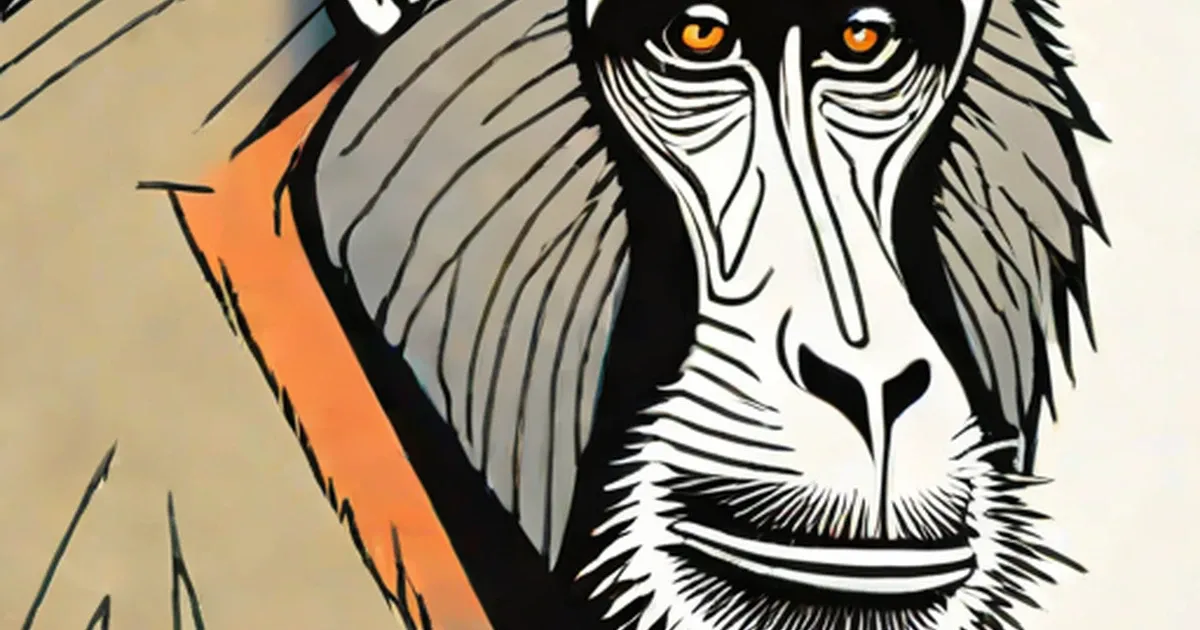
The largest monkey species, mandrill is gifted with built-in pockets in the cheeks for temporary storage of food. The muzzle of mandrill is long and vivid red in color. For more fascinating mandrill monkey facts, read on...
If you have spotted a large monkey having a strikingly red nose and colorful face, most likely it is the mandrill species. Yes, a mandrill is perhaps the most colorful of all mammal species known to us. It is closely related to the old world monkeys, drill and baboon. Sexual dimorphism exists in mandrills, especially in terms of size and other physical traits. The mandrill is a social, but shy monkey species. Hence, animal conservationists have a difficult time in following mandrills in the wild for study purposes.
The Mandrill Monkey: Facts and Information
You can identify a mandrill monkey from its distinctive characteristics, blue and red coloration of face, olive colored fur and hued rumps. A male mandrill can be identified from its colorful rump that becomes more pronounced with sexual maturity. Upon studies, it is found that the mandrill monkeys bear a scent gland in the chest area. But, they are not sure about the real purpose of this gland. More mandrill monkey information is discussed in the following paragraphs.
Mandrill Monkey Size
Mandrill monkey facts about size is known to nearly all of us. The male having a body length of 32-36 inch weighs about two times the weight of a female that measures 22-26 inch. For both, the tail length averages 2-3 inch. Body weight of a male falls between 55-77 pounds, while the female weight is about 25-30 pounds.
Mandrill Monkey Habitat
The natural habitat of mandrill monkey is located in the rainforest and woodlands of West Africa. An exclusive terrestrial primate, it prefers to spend most of its time on the forest floor. Nevertheless, for resting, it climbs large trees and sleeps on the branches. At times, a group of mandrills enter cultivated areas and cause destructive damage to crops.
Mandrill Monkey Diet This type of monkey
is omnivorous, and its diet comprises a wide range of fruits, plant roots, other vegetative parts, insects, small amphibians, reptiles and other animals. Just like other large rainforest animals, it wanders on the forest floor in search of foods. An adaptive feature of this large primate is, it stores small amounts of foods in its cheek pouches.
Mandrill Monkey Behavior
Mandrills live in groups with a leading male for each of groupings. The population size of troop can be as large as 1,000, and basically comprises females and their young ones. Although they are social animals, the males tend to live solitary. Occasionally, female and male groups are formed and they forage together.
Mandrill Monkey Reproduction
The female mandrill becomes sexually mature after 3.5 years. Likewise, a male attains sexual maturity at the age of 3-4 years. In the estrous cycle, it is usually the male that follows the female for mating. After copulation, the female becomes pregnant for about 6 months, and gives birth to one infant.
Infant Mandrill Monkey
A young mandrill is hairy and is born with open eyes. Its skin remains pink and hair is black for the first two months after birth. Daughters share a special bond with the mother, while the sons become solitary after attaining sexual maturity. Thus, the two females are often found relaxing together and grooming each other.
Mandrill Monkey Lifespan
The longevity of mandrill monkey in the wild is not clear. However, the male is believed to live for 25 years, while the female lifespan is shorter the male, about 20 years. In captivity, a mandrill can survive up to 31 years.
This was a brief overview on mandrill monkey facts. In the wild, its main predators are leopard and pythons. When attacked, it shows off its extra long canine teeth to ward off its enemies. Despite the long lifespan of mandrill monkey, it is categorized in the vulnerable animals list. The main threats to this large monkey species are massive hunting for meat and loss of rainforest habitat.