Champagne Facts
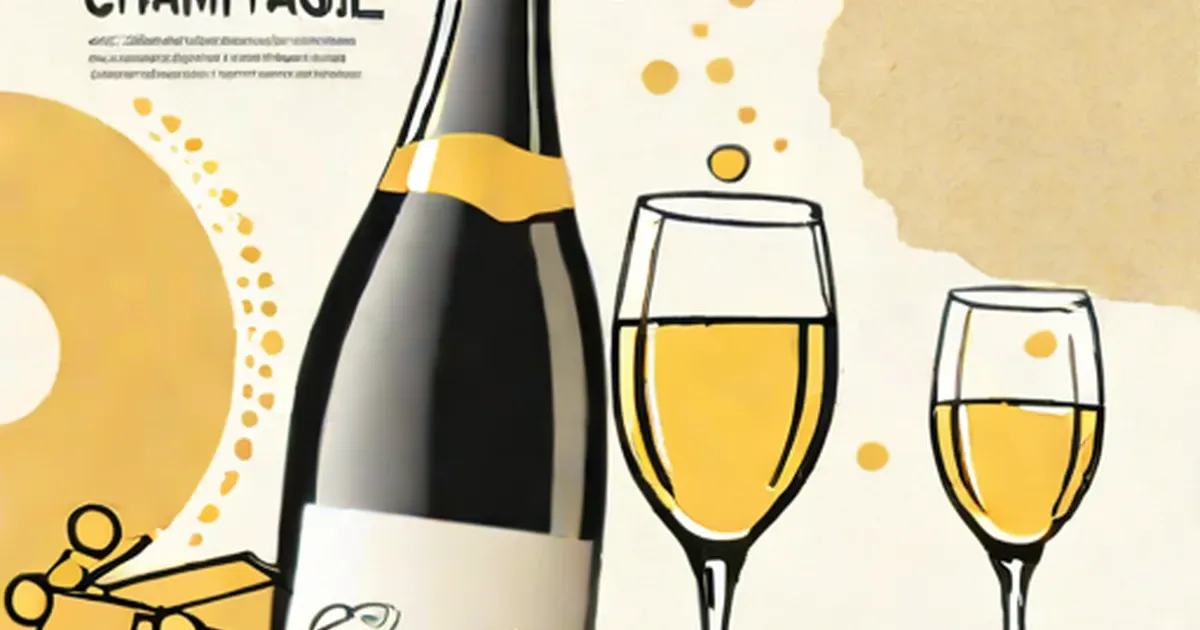
Most of us know that champagne and celebration are synonymous. But how many of us know the facts about champagne. Read the following article for all the champagne facts you wanted to know.
Champagne, a sparkling and bubbly drink, is one of the most admired and popular alcoholic beverages across the globe.
Champagne is a sparkling, white colored wine that is produced by secondary fermentation. Champagne is produced in a region in France by the same name and is called the wine region of France
. Champagne is an integral part of every celebration, be it a birthday, wedding, Christmas and Halloween. Champagne taste best when it is ice cold and complements various meals. Champagne is made from grapes, where the juice is extracted and undergoes double fermentation, once in the barrels and the second time in the bottles it is stored in, to yield a ‘glittering’ wine. Let’s see more about some champagne facts. For more information you can also refer to wine producing regions of France.
French Champagne Facts There are many amazing facts about the drink of the elite - champagne, that are not known by many. One of the facts is that there are many champagne types
. Given below are more such interesting champagne facts;
- Champagne is believed to be first invented in France in the seventeenth century by Dom Perignon, a Benedictine monk at the Abbey of Hautvillers, who knew about the wine making techniques.
- There is also another version of the story related to the birth of champagne. This sparkling white wine was produced by Christopher Merret in 1662 in England.
- Unlike wine that is made out of only one type of grapes, champagne is made from three different types of grapes; two varieties of black grapes, Pinot Meunier and Pinot Noir and a variety of white grapes Chardonnay. Since champagne is white in color, it is interesting to note that the majority of grapes used are black grapes. The black grapes are pressed lightly just to extract the juice, leaving behind the dark colored skin. These juices are then kept in caskets in a wine cellar, to undergo fermentation.
- Champagne was actually discovered by sheer accident. The wine that was produced in Champagne (the French region) were kept in cellars. Due to the carbon dioxide gas that was produced during fermentation the thin glass bottles could not handle the built in pressure and would burst causing jeopardy to the workers. It was not until the British began shipping the wine and storing it in stronger bottles that the drink became popular.
- The name ‘champagne’ is copyrighted and the wine can be named as champagne only if it is produced in Champagne, (the northeastern region of France). If a similar wine is produced, using the same methodology, elsewhere other than Champagne, then it has to be labeled as methode champenoise so as to give credit to the procedure.
- Approximately 49 million bubbles can be found in a 750 ml champagne bottle that is stored at 20 °C. This figure was calculated by a renowned scientist Bill Lembeck.
- The pressure in a champagne bottle is three times higher than in an automobile tire, measuring at ninety pounds per square inch.
- There is a popular legend that a ‘coupe’ which is a broad rimmed shallow goblet was made using wax molds in order to resemble Marie Antoinette’s bosom.
- The world’s tallest champagne glass stands at approximately seven feet and can hold upto 22 bottles of champagne. This glass was unveiled at a festival in Spotelo, a city in Italy.
- Heidsieck & Co Monopole Blue Top Champagne Brut was the champagne that was served on Titanic. There was a rumor that a few bottles of this champagne that were recently brought out of the wreckage still tasted fantastic.
- Marilyn Monroe, a popular American actress is believed to have taken a ‘champagne bath’. It took approximately 350 champagne bottles to fill the bath tub.
These were some fascinating champagne facts. Champagne goes very well with seafood, especially smoked salmon, lobsters, crabs and oysters. The next time you have a party, simply amaze your friends by telling them these random facts about champagne and earn brownie points. Cheers!