You Got a High Cholesterol Number. Here’s Where to Actually Start
You’re standing in the kitchen with a piece of paper in your hand, and one line has a red circle around it. LDL: 168. Or maybe it’s the total cholesterol number, or the doctor’s office called and said “let’s talk about your levels” in that tone that makes your stomach drop a little. You Google it standing there, and within about four clicks you’re reading something that makes it sound like you’re one bad breakfast away from a cardiac event.
Take a breath. High cholesterol is one of the most common things a lab printout flags, and it’s also one of the most workable. Most of what drives that number responds, often quite a bit, to changes you can actually make without moving into a wellness retreat. So let’s back up and talk about what that number means, what’s really driving it, and what a realistic first month looks like.
What is cholesterol, and why does your body even need it?
You need cholesterol to survive. Every cell in your body uses it to build its outer membrane, and your body uses it to make hormones, vitamin D, and the acids that help you digest fat. Your liver makes most of the cholesterol in your bloodstream on its own, whether or not you eat a single egg. So what matters is how much is circulating and what kind.
A standard lipid panel blood test breaks that circulating cholesterol into a few pieces:
- LDL cholesterol is the one that gets circled in red. It carries cholesterol from your liver out to the rest of your body, and when there’s too much of it, it can build up in the walls of your arteries. That’s why it gets the unflattering nickname “bad” cholesterol.
- HDL cholesterol works in the other direction, carrying extra cholesterol back to the liver to be cleared out. Higher HDL is generally protective, which is why it’s often called “good” cholesterol, though the picture is a little more nuanced than a simple good-versus-bad split.
- Triglycerides are a different kind of fat in your blood, mostly related to how your body stores unused calories, whether they came from fat, sugar, or alcohol. High triglycerides often travel alongside other risk factors like extra weight around the middle or insulin resistance.
There’s also a number called non-HDL cholesterol, which is your total cholesterol minus your HDL. It bundles LDL together with a couple of other particle types that also contribute to buildup in artery walls, and some doctors weigh it just as heavily as LDL, sometimes more. If your printout has that line and nobody’s mentioned it, it’s worth asking about at your next visit.
Generally speaking, an LDL under 100 mg/dL is considered optimal and an HDL of 60 or higher is considered protective, with plenty of room in between where your doctor will weigh your whole picture rather than one number in isolation. Triglycerides show up on the same panel, and lower is generally better there too, though the reading depends partly on whether you fasted beforehand, since eating in the hours before a blood draw can push that number up temporarily. That whole picture, including your age, blood pressure, family history, and other risk factors, matters more than any single line on the page.
What actually raises cholesterol?
This is the question worth sitting with, because the honest answer is: it’s genuinely a mix of things you didn’t choose and things you can influence. Both are true at once, and neither cancels the other out.
A family history of heart disease or high cholesterol is a real factor, and for some people it’s the dominant one. There’s a genetic condition called familial hypercholesterolemia, affecting roughly 1 in 250 people, that causes very high LDL, often above 190 mg/dL, from a young age regardless of diet. If that runs in your family, lifestyle changes still matter but they’re not the whole story, and medication conversations tend to happen earlier. That’s simply how the biology works, and it says nothing about how carefully you’ve been eating.
For most people, though, cholesterol levels are shaped by a combination of factors that do respond to changes:
- What you eat, particularly how much saturated and trans fat is in your regular diet
- How much you move, or don’t, over the course of a week
- Your weight, especially weight carried around the abdomen
- Whether you smoke
- How much alcohol you drink
- Other conditions like diabetes or hypothyroidism, which can push cholesterol up as a side effect
- Chronic stress and poor sleep, which can nudge cholesterol and other risk factors in the wrong direction over time
Knowing which part is genetics and which part is lifestyle helps you set realistic expectations. If part of your number is genetic, no amount of guilt or kale is going to argue with your DNA, and that’s worth knowing so you’re not white-knuckling your way through a diet overhaul expecting a miracle. If part of it is lifestyle, that’s good news: it means you have real levers to pull, even if you’re only able to pull one or two of them right now.
Risk factors stack. Someone with a strong family history who also smokes and carries extra weight around the middle is dealing with several at once, which is part of why doctors look at your whole profile instead of treating LDL as a standalone score to fix.
What foods actually help lower cholesterol?
You don’t need a meal plan with seventeen rules to move this number. A few things do most of the work.
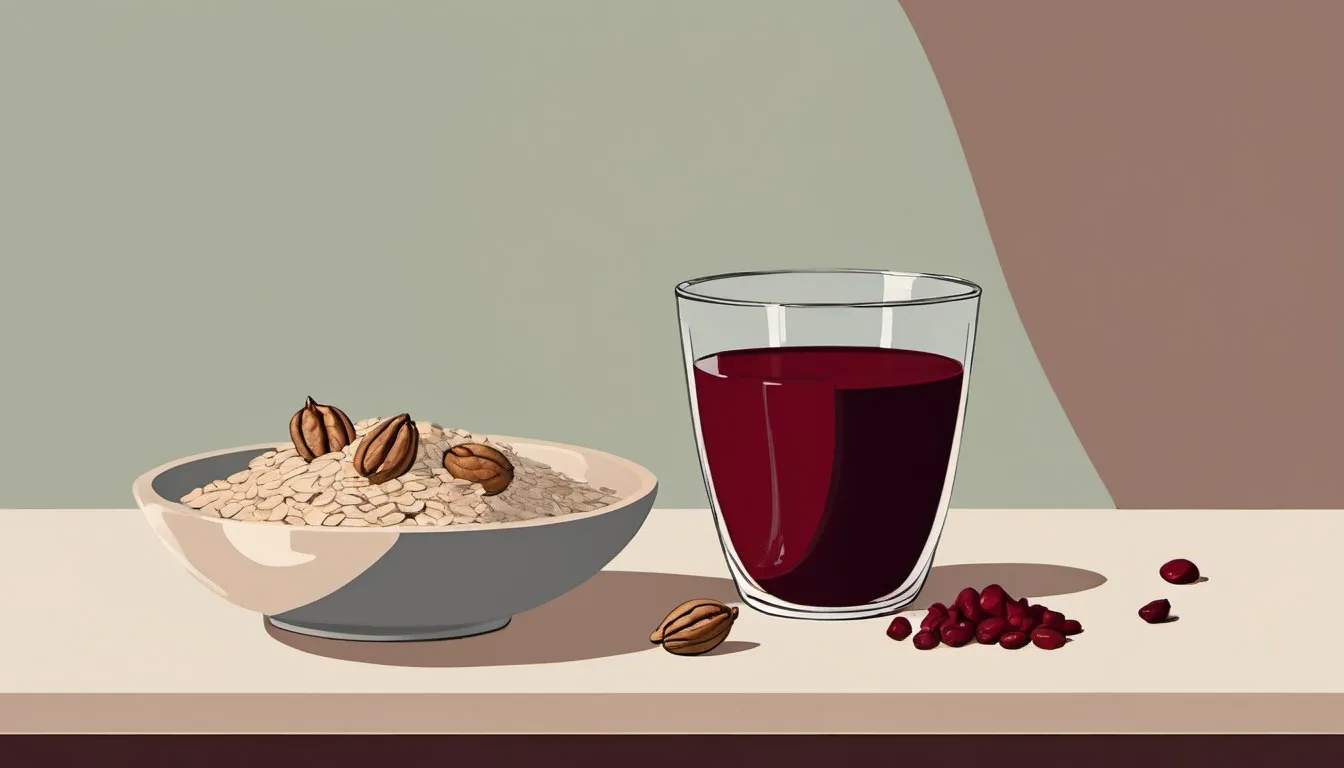
Soluble fiber is probably the single most useful thing to add. It binds to cholesterol in your digestive system and helps carry it out of your body before it gets absorbed. You’ll find it in oats, beans and lentils, apples, pears, and barley. Eaten consistently, it lowers LDL by a modest but real amount, the kind of shift that shows up on a lab panel after a few months of steady habit, not after one big bowl of oatmeal. How much it moves depends on how much fiber you’re adding and what your diet looked like before you started, which is exactly why this works best as a standing habit rather than a two-week experiment. Oats instead of a sugary cereal, or beans stirred into a soup you were already making, is a swap you can keep making on an ordinary Tuesday, which is exactly why it moves the number more reliably over a year than a diet you white-knuckle for three weeks and quit.
The type of fat you eat is the bigger lever here. Saturated fat, found in butter, fatty cuts of red meat, full-fat dairy, and a lot of packaged baked goods, tends to raise LDL. Swapping some of it for unsaturated fats, olive oil instead of butter for cooking, nuts or avocado instead of a bag of chips, fatty fish like salmon a couple of times a week instead of processed meat, tends to move things in the right direction. You don’t have to swap everything. Swapping the fat you use most often, the one you reach for on autopilot, gets you most of the benefit for the least friction.
Trans fat is the one worth actually cutting rather than just reducing. It’s mostly been phased out of the U.S. food supply, but it still shows up in some fried foods and older packaged products under the name “partially hydrogenated oil.” Check a label if something seems suspiciously shelf-stable and fried at the same time.
Plant sterols and stanols are another lever, though a smaller and more optional one. They’re compounds found naturally in small amounts in vegetables, nuts, and seeds, and they’re added in larger amounts to some fortified margarines, orange juices, and yogurt drinks marketed specifically for cholesterol. They work by blocking some cholesterol absorption in your gut. You don’t need them to see progress, but if you already buy margarine or orange juice, choosing a fortified version is a zero-effort swap.
None of this requires counting anything. If you only change one meal, make it breakfast: oats with fruit instead of a pastry is a genuinely easy, low-effort place to start.
Here’s what a realistic day looks like once a few of these swaps are in place: oatmeal with berries and a spoonful of ground flaxseed for breakfast, a lentil soup or a salad with beans and an olive oil dressing for lunch, a handful of almonds as an afternoon snack instead of chips, and salmon or a bean-based dinner with a big side of vegetables cooked in olive oil instead of butter. That’s a regular week of eating with a handful of the highest-impact swaps built in, and none of it requires a specialty grocery store.
Do eggs and shrimp actually raise your cholesterol?
For most people, less than you’d think. An egg has about 186 mg of dietary cholesterol, and shrimp has a similar amount per serving, which is why both got a reputation as foods to fear. But dietary guidance dropped the old hard limit on cholesterol intake years ago, because for most people the body compensates: eat more cholesterol and your liver tends to produce a little less on its own, so the net effect on blood levels is smaller than the sticker number on the food suggests.
Shrimp is actually a decent example of why this gets confusing. It has dietary cholesterol but very little saturated fat, and saturated fat is the bigger driver of LDL for most people. An egg is similar: the yolk has cholesterol, but the bigger question for your numbers is usually what you’re cooking it in and what’s on the plate next to it, a pat of butter and two strips of bacon, or a slice of whole-grain toast and some fruit.
There’s an exception. A subset of people are what researchers sometimes call “hyper-responders,” whose LDL does rise more noticeably with dietary cholesterol. There’s no easy way to know in advance whether that’s you without testing before and after a period of higher intake, so if eggs or shellfish are a big part of your diet and your LDL is stubbornly high despite the other changes on this page, it’s worth mentioning to your doctor rather than guessing.
How much exercise actually helps cholesterol?
Less than you’re picturing, and you don’t need to be training for anything. The American Heart Association’s general activity guidance is around 150 minutes of moderate activity a week, which breaks down to about 30 minutes a day, five days a week, and “moderate” means brisk walking, not sprinting.
Brisk walking on its own, done consistently, tends to raise HDL a little and can help lower triglycerides, especially when it’s paired with even modest changes to what you’re eating. You don’t need a gym membership or a fitness tracker buzzing at you. A 30-minute walk after dinner, most days, counts. So does splitting it into two 15-minute walks if that fits your day better. Three thirty-minute walks most weeks, kept up for two months, will do more for your numbers than one hard workout followed by two weeks on the couch.
Walking isn’t the only option, and it doesn’t have to be the one you pick. Swimming, cycling, dancing, or yard work that gets your heart rate up all count toward that weekly total. Adding two short strength-training sessions a week, using dumbbells, resistance bands, or just your own body weight, doesn’t move cholesterol as directly as aerobic activity does, but it helps with the weight and metabolic side of the picture, which circles back to your lipid numbers indirectly.
If you’re starting from close to zero activity, even going from nothing to a few short walks a week tends to show up on the next lab panel. You don’t have to go from the couch to running before you see a change.
Do weight, smoking, and alcohol really matter that much?
Honestly, yes, but unevenly, and this isn’t a scoreboard to feel bad about. Here’s the realistic version of each.
Weight. Losing even a modest amount, roughly 5 to 10 percent of your body weight, has been shown to meaningfully improve triglycerides and total cholesterol for a lot of people. LDL tends to need a bigger push: the clearer improvements there tend to show up with larger weight loss, but any amount in the right direction helps your overall numbers, and none of it has to happen fast. For someone at 180 pounds, 5 to 10 percent is 9 to 18 pounds, and it counts just as much spread across six slow months as it would if you dropped it in six weeks, which you shouldn’t try to do anyway.
Smoking. This one has an outsized effect and it’s one of the more direct levers available. Smoking lowers HDL, the protective kind, and quitting tends to raise it back up within weeks to months. If you smoke and you’re only going to change one thing on this list, your doctor will very likely tell you this is the one with the clearest payoff, for your cholesterol and for a lot else.
Alcohol. The relationship here is less dramatic than headlines have made it sound over the years, and current guidance has moved away from the old idea that a daily glass of wine offers meaningful heart protection. What’s clearer is that heavy or frequent drinking raises triglycerides. If you drink, aim for moderation; a strict zero is only necessary if your doctor has a specific reason to ask for that.
These three also tend to travel together in practice. People who quit smoking sometimes gain a little weight in the first few months, which can offset part of the cholesterol benefit temporarily. That’s a well-documented, temporary trade, and it fades as new habits settle in over the following year. If you’re tackling more than one of these at a time, expect the numbers to move unevenly rather than all improving in a straight line.
Weight, smoking, and alcohol are three separate levers. You get to choose which one is realistic for your life right now, and picking just one is a completely reasonable place to start.
Will you need medication?
Maybe. That’s a decision for you and your doctor, based on more than the one number that got circled. Statins and other cholesterol medications are common, well studied, and for a lot of people they work alongside lifestyle changes rather than replacing them.
If your numbers are high enough on their own, or your overall cardiovascular risk calls for it, your doctor may bring up medication at some point in this process. That’s a normal, ordinary part of managing cholesterol for a lot of people. It doesn’t cancel out the value of the walks or the oatmeal either; medication and lifestyle changes work together far more often than one replaces the other.
What medication actually looks like for you, which drug, what dose, what to expect, is a conversation for your doctor or pharmacist. They can walk you through the options and what to watch for once they’ve seen your full picture.
Your doctor will usually factor in your overall cardiovascular risk here too: your age, blood pressure, family history of heart disease, whether you have diabetes, and your other lab values. Two people with an identical LDL reading can get very different recommendations because the rest of their picture is different. A 45-year-old with no other risk factors and a 62-year-old with high blood pressure and a family history of early heart attacks might see the same LDL number handled two completely different ways.
If your doctor brings up medication, the changes you’ve already made were still worth making, and they’ll likely keep making a difference alongside whatever else your doctor suggests. For some people, genetics and biology need more help than diet and exercise alone can give, and that’s simply what the situation calls for.
Do supplements like fish oil or red yeast rice help?
Sometimes a little, but they’re not a shortcut around the basics, and a few of them come with real caveats worth knowing before you buy anything.
Fish oil supplements are concentrated omega-3 fatty acids, and they’re mostly studied for triglycerides rather than LDL. High-dose prescription versions exist for people with very high triglycerides, but the over-the-counter versions on a drugstore shelf are a different, less concentrated product, and the evidence for them moving your numbers meaningfully is mixed.
Red yeast rice contains a compound that works similarly to a statin because it’s chemically related to one, which means it comes with similar considerations around dosing and drug interactions, the same considerations you’d want to raise with a doctor even though it’s sold as a supplement. The amount of active compound varies widely between brands, since supplements aren’t regulated the same way medications are.
Bring whatever supplement you’re considering, or already taking, to your doctor or pharmacist, especially if you’re also on a prescription medication. Supplements can interact with statins and other drugs, and “natural” doesn’t mean automatically safe to combine with something else.
How often should you actually get it checked?
Most adults get their first lipid panel through a routine physical sometime in their twenties or thirties. Sometimes earlier, if a doctor has a specific reason to look sooner.
After that, a panel every four to six years is the general starting cadence for most healthy adults. That interval shrinks if your numbers have come back elevated, or if you’re carrying other risk factors like a family history of heart disease, diabetes, or high blood pressure. Your doctor will likely want to recheck more often in that case, sometimes annually, sometimes sooner if you’re actively making changes and want to see whether they’re working.
If it’s been more than six years since your last panel and nobody’s mentioned it, that’s a reasonable thing to ask about at your next visit rather than waiting to be reminded.
If you’ve just made a real change, new walking routine, different breakfast, quit smoking, ask your doctor when it’s actually useful to retest. Checking too soon can be discouraging, because some of these changes take a few months to show up clearly on a lipid panel.
If you only do one thing this month, what should it be?
Pick whichever change on this page felt easiest to imagine yourself actually doing while you were reading it. Skip the one that sounded most impressive if it’s not the one you’ll keep doing on a Wednesday in March. If that’s swapping your usual breakfast for oats a few mornings a week, do that. If it’s a 20-minute walk after dinner, do that. If smoking is the honest answer, that conversation with your doctor about quitting is worth more than any dietary change on this list.
You don’t need to overhaul your kitchen, start a supplement regimen, or treat this number like an emergency. Pick the one change you can actually keep doing for the next three months. That’s the one that will show up on your next lab panel.
This is general wellness information, not medical advice. Talk to a healthcare professional about your specific situation.