Nocturnal Animals
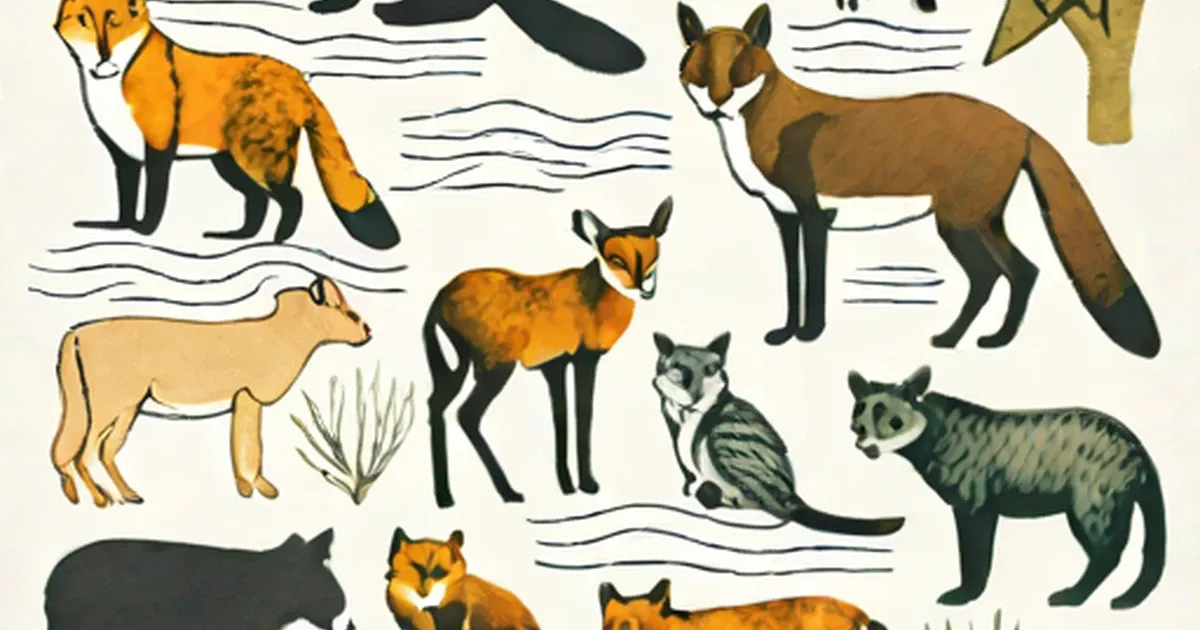
Nocturnality is a unique behavior found in only a few specific animals. To know all about nocturnal animals, including some interesting facts, read on...
There are thousands of animals in this world, grouped into an animal kingdom of many sub-categories based on shared characteristics. The animals included in the category of nocturnal animals share a special trait: unlike most animals, they sleep during the day and carry out all their activities during the night. So now you know why your pet cat is asleep throughout the day and vanishes at night! Not only animals — some plants are nocturnal too, blooming at night and closing during the day.
The animal kingdom is in fact divided into diurnal, crepuscular and nocturnal animals. Diurnal animals remain active through the day; crepuscular animals such as the flying squirrel and mink are most active at dawn and dusk; and nocturnal animals — the raccoon, red fox, owl and skunk among them — remain awake and active during the night. Some animals described as nocturnal are active in the daytime as well, while a few, like bushbabies and bats, rely entirely on their post-twilight heightened instincts.
Why are Nocturnal Animals Called So?
There are two main reasons behind nocturnality. Nocturnal behavior is mainly seen in animals that live in areas of extreme heat or deserts. These animals cannot adapt to the heat, so they sleep during the day and are active during the cooler night; the nocturnal pattern also enhances osmoregulation, helping desert animals conserve water. Protection is the other important factor. Most animals hunt during the daytime, so nocturnal animals remain inactive then to avoid these diurnal predators — which is why nocturnal animals generally feed on other nocturnal animals. This niche differentiation makes an additional time zone and additional resources available to the animal, with less competition and greater safety. Some nocturnal species, like sea turtles and seabirds, even visit breeding sites at night to reduce the risk of predation on themselves and their offspring.
How Nocturnal Animals See and Hunt in the Dark
We stumble in dim light and can barely see in pitch darkness, which is why the survival of nocturnal animals seems remarkable. Some, like cats and lemurs, have specially adapted eyes; many have special eye cells called rods that capture far more light in the dark than human eyes can. Others have dim eyesight but are blessed with an extremely strong sense of smell, hearing and touch. Scents also linger longer in the still night air, making it easier for these animals to pick up and track food. Their sharp hearing lets them locate prey fleeing over fallen leaves and twigs — in the animal kingdom, the winner is often the one who hears and locates the other first. Bats take this further with echolocation, emitting a high-pitched sound that bounces off objects to reveal their shape, distance and direction. Physical adaptations help too: the owl has a feather lining on the edge of each wing that muffles sound as it swoops on prey, a cat has heavy fur and soft foot pads for sneaking up on a meal, and the aardvark can hear and smell insects as it walks along.
Some quick facts about nocturnal animals for kids:
- Hamsters make a burrow and hide in it throughout the day to stay safe from their enemies.
- Snow leopards use the snow to camouflage themselves while hunting their prey.
- Aye-aye is about 16 inches long, and yet it sleeps in a nest it builds itself.
- Owls can hunt with ease at night thanks to their strong eyesight.
The following is a list of nocturnal animals still found in some part of the world (extinct animals are not included):
- Cat
- Wolf
- Skunk
- Jaguar animal
- Possum
- Eastern Woolly Lemur
- Kakapo
- Badger
- Raccoon
- Firefly
- Tarantula
- Bat
- Mouse
- Scorpion
- Gerbil
- Hedgehog
- Bat-eared Fox
- Python regius
- Rabbit rat
- Oncilla
- Binturong
- Hamster
- Octodon
- Flying Squirrel
- Panamanian Night Monkey
- Western Woolly Lemur
- Iranian Jerboa
- Cyprus Spiny Mouse
- Aye-aye
- Bush Rat
- Hermit Crab
- Kiwi
- Opossum
- Perdido Key Beach Mouse
- Hoffmann’s Two-toed Sloth
- Chohan Monkey
- Koala Bears
- Margay
- Catfish
- Tarsier
- Phyllophaga (genus)
- Spectacled Bear
- Wombat
- Mole
- Paradoxical Frog
- Ratel (Honey Badger)
- Nine-banded Armadillo
- Galagos
- Slow Loris
- White-faced Storm-petrel
- Owl
- Cockroach
- Kit Fox
- Cricket
- Mink
- Red-eyed Tree Frog
- Great Grey Slug
- Brazilian Rabbit
- Pangolin
- Kangaroo
This was all about nocturnal animals. Now that you have all the information, you can easily differentiate between nocturnal and other species of animals — who knows, you may even come across an undiscovered one!