Dry Rot vs Wet Rot: The Poke-and-Sniff Test That Settles It
You’re on your knees with a flashlight under the windowsill, and the wood there just doesn’t feel right anymore. It gives a little when you press it, like a stale cracker. Maybe there’s a musty smell, maybe a weird cottony fuzz in the corner, maybe nothing you can quite name, just a wrongness. So you do what everyone does: you get up, dust off your knees, and Google it. And now you’ve got two different fungi staring back at you, two different repair paths, and two very different price tags, with no idea which one is actually under your windowsill.
Here’s the fast version so you’re not squinting at spore diagrams before you’ve even had coffee: dry rot dries out, cracks into little cube shapes, gets crumbly and light, and can spread on its own by sending strands through masonry to find its next meal. Wet rot stays damp and soft or stringy, and it pretty much stays exactly where the moisture is. If the wood is dry, brittle, and breaking into neat little squares, think dry rot. If it’s dark, squishy, and still wet to the touch, think wet rot. That’s the one-line rule of thumb. Now let’s actually confirm it together, because guessing wrong here means either overpaying for repairs you don’t need or underdoing repairs you do. (Five minutes with a flashlight beats a five-hundred-dollar guess.)
So Is This Dry Rot or Wet Rot? Here’s the Fast Answer
Both are fungi that break down the wood in your home when it’s been damp for too long. Dry rot, caused by a fungus called Serpula lacrymans, is the more feared of the two because once established it doesn’t need the wood to stay wet. It can keep going by moving water through its own root-like strands, which also means it can push through brick and plaster to reach untouched timber elsewhere in the house. Wet rot, often caused by a fungus called Coniophora puteana, one of the more common wet rot fungi, needs consistently damp wood to survive. Leave that timber wet and the fungus keeps feeding, but wet rot won’t dry out or improve on its own, it keeps getting worse until the moisture is dealt with and the affected wood is treated or replaced, which is honestly the one manageable part of this whole business.
That distinction changes two practical things: how far you have to open up the wall to find where the damage stops, and how much wood you end up pulling out.
What Does Dry Rot Actually Look Like?
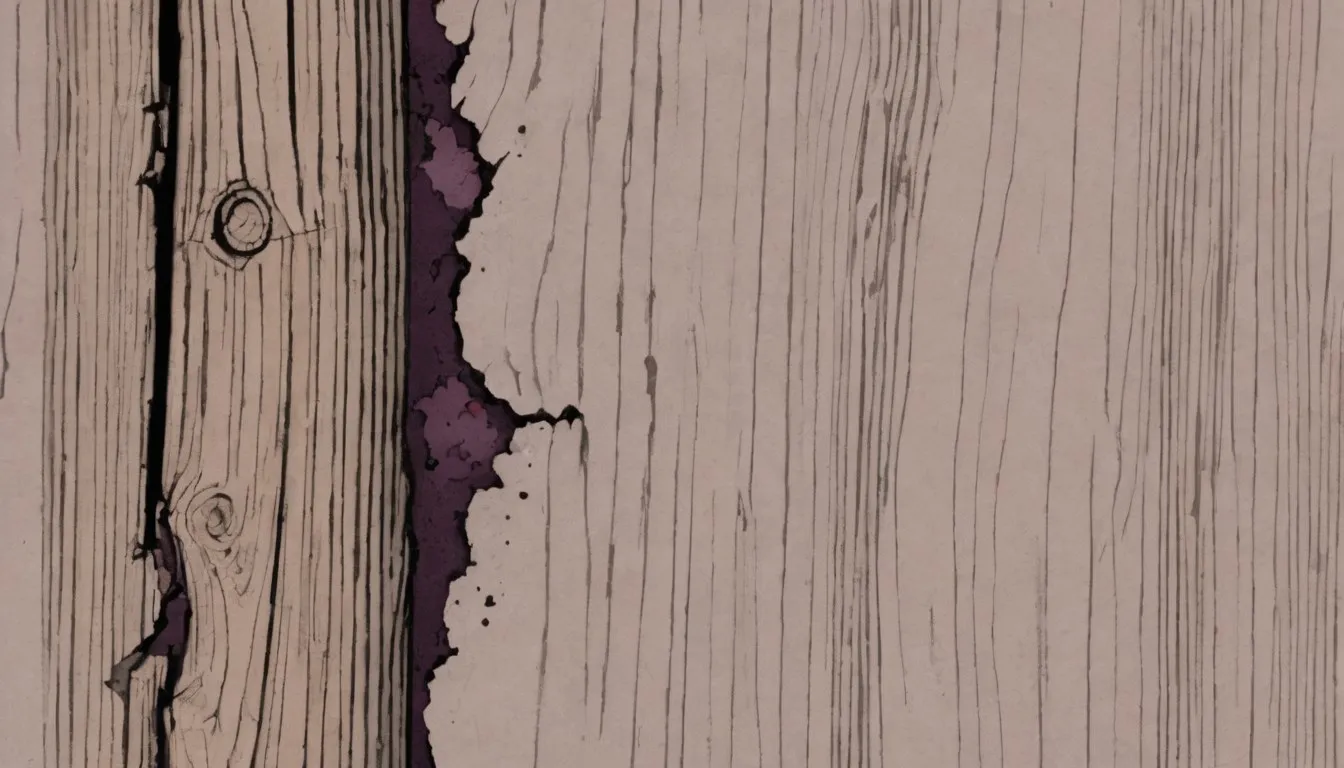
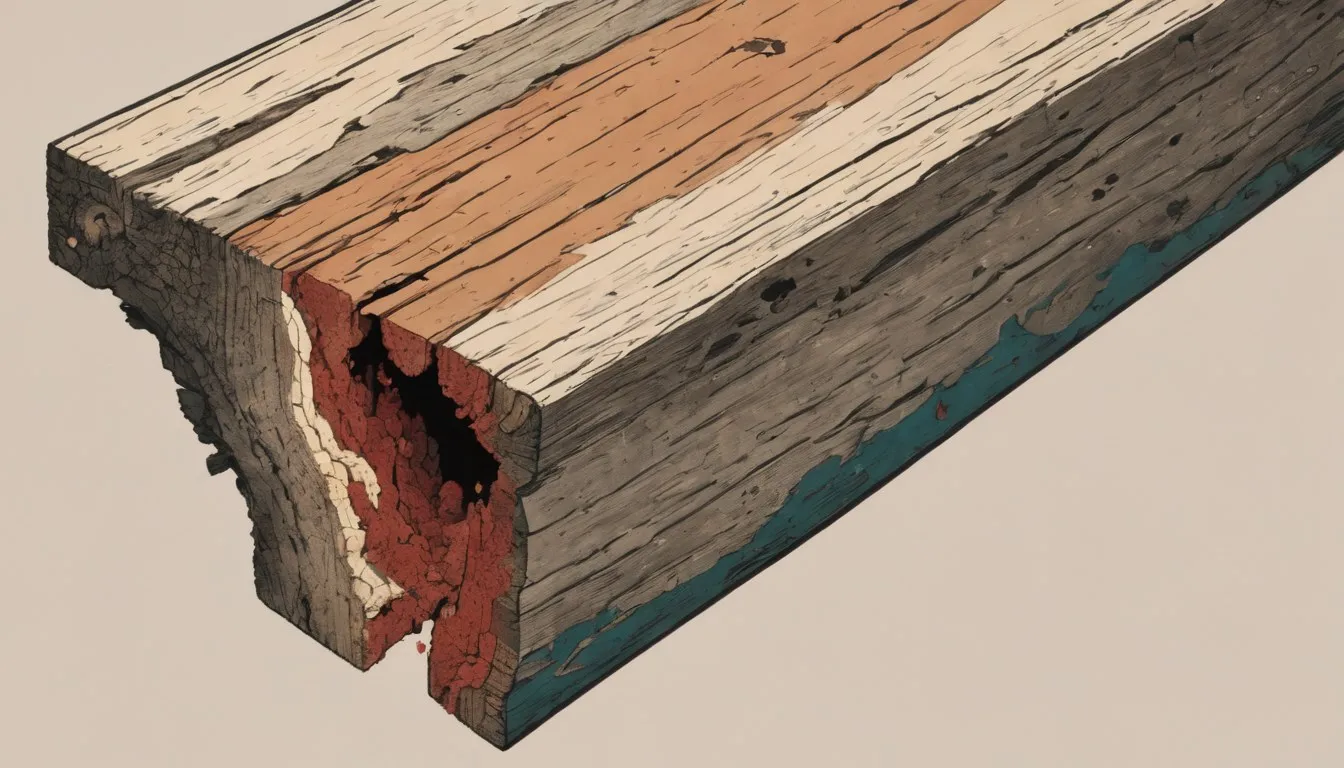
Dry rot has a handful of tells that, once you’ve seen them, are hard to mistake for anything else. The wood cracks in a distinctive cuboidal pattern, small, roughly square blocks separated by deep cracks running both with and across the grain, like a dried-out lakebed shrunk down to fit on a joist. Press it and it crumbles dry, like a shortbread edge. Dry, affected wood can crumble to a dusty, almost powdery texture in your hand.
Then there’s the fungus itself, which is the part that tends to unsettle people the most. Active dry rot often shows up as a grayish-white, cotton-wool-like growth, sometimes described as looking like a fine mattress of cotton batting tucked into a corner or along a beam. In more advanced patches you might see a flatter, pancake-shaped fungal growth with a silvery-gray or lilac-tinged surface. If it’s fruiting, you may notice a reddish-brown dust settling on nearby surfaces, the fungus releasing spores as it matures, sometimes described as looking like a fine layer of paprika. And there’s a smell: often described as mushroomy, damp, or earthy, the kind of smell you associate with a forest floor rather than a hallway closet.
None of these signs necessarily show up all at once. You might get the cuboidal cracking without ever spotting the fruiting body, especially if the rot is tucked behind plaster or under flooring where you can’t see it directly. But when you do see two or three of these together, cracking, cotton-like growth, that reddish dust, you’re looking at dry rot with a fairly high degree of confidence.
What Does Wet Rot Look Like Instead?
Wet rot tends to look messier and darker than dry rot. Instead of neat cubes, the wood just darkens, softens, and loses its shape.
Depending on which fungus is involved, wet-rotted timber shows up one of two ways. Sometimes it’s soft and spongy, darkening and shrinking as it goes, that’s brown rot. Other times it’s softer still and almost stringy, a shade lighter in color, which means you’re looking at white rot, or Poria.
Either way, you’ll know it the second you poke it. The wood gives right under your finger, and it stays wet or damp to the touch for as long as the fungus is active. Cut off the moisture and wet rot fungi can’t keep feeding, unlike dry rot.
You won’t typically see the dramatic cotton-wool growth or the reddish spore dust that dry rot produces. Wet rot’s fungal growth, when visible at all, tends to be thinner, darker strands rather than a thick fluffy mass, and it’s far less likely to be the first thing you notice. Most people find wet rot by pressing on a sill or a fence post and feeling it give, long before they ever notice any fungal growth at all. It’s the sill that dents under a thumbnail, the fence post that’s spongy at the base, the bottom of a door frame that’s gone punky and dark near a leaky gutter.
The smell with wet rot is more of a plain damp, musty odor, similar to a basement that doesn’t get enough air, rather than the specifically mushroomy note people describe with dry rot. It’s a softer signal, which is part of why wet rot sometimes goes unnoticed longer: it just looks like ordinary water damage until you actually test the wood.
The Smell, Touch, and Screwdriver Test You Can Do Right Now
You don’t need any special equipment to get a decent read on what you’re dealing with, just five minutes and whatever’s already in a kitchen drawer.
- The screwdriver or awl push test. Press the tip firmly into the suspect timber. Wood that’s structurally sound will resist and feel solid. Wood affected by rot, either kind, will give way more easily than it should. If it crumbles into dry, dusty little chunks, that leans dry rot. If it goes in with a wet, squishy give and the wood feels saturated around the tool, that leans wet rot.
- The moisture check. If you own a moisture meter, or want to borrow one before calling anyone, healthy structural timber generally reads under 20% wood moisture content. Wet rot typically shows readings well above that threshold in the affected area, because the fungus needs that ongoing dampness to survive. Dry rot can sometimes be found in wood that reads drier than you’d expect, since the fungus is capable of transporting its own moisture to timber that isn’t directly wet from an external source.
- The smell test. Get your nose close to the affected area. A mushroomy, earthy, forest-floor smell points toward dry rot. A flatter, generic musty damp smell without that distinct mushroom note points toward wet rot.
- The look test. Cuboidal cracking, cotton-wool fluff, or reddish dust means dry rot. Dark, spongy or stringy wood without that cube-shaped cracking means wet rot.
- The spread check. Look at nearby masonry, brick, plaster, mortar joints, for any fine, root-like strands running across or through it, sometimes described as looking like gray string or thin cords. That’s a strong dry rot signal, since wet rot has no ability to travel through masonry this way.
Run through these five and you’ll usually land on a fairly confident answer. If you’re still torn between the two after all that, or if you’re seeing strands in masonry beyond the wet timber itself, that’s worth treating as dry rot until someone confirms otherwise, simply because an unnecessary inspection costs a lot less than opening the same wall twice.
Why Does It Matter Which One You Have?
This is really the whole point of figuring it out before you call anyone or buy anything. Wet rot is, in almost every practical sense, the easier problem. It’s confined to wherever the moisture is: the base of that window frame, the bottom of the door, the fence post sitting in wet soil. Fix the moisture source, cut out and replace the affected wood, and you’re generally done. The fungus can’t travel to dry timber because it can’t survive without ongoing dampness, so there’s no need to go hunting through the rest of the house for it.
Dry rot changes the math because of that self-sufficient spread. Its strands can carry moisture and nutrients through brick, mortar, and plaster to reach timber that was never directly wet at all, which is exactly why dry rot can keep spreading on its own even after the original leak is fixed. That’s why professional treatment of dry rot usually means checking and often opening up a wider radius around the visibly affected timber than you’d ever need for wet rot, and why containment and inspection tend to be more involved. It’s also why dry rot gets treated with more urgency than an isolated patch of soft wood by a leaky pipe: by the time you can see it, it may already be somewhere you can’t.
Does Wet Rot Turn Into Dry Rot If You Ignore It?
This is one of the most common mix-ups. Wet rot and dry rot are different fungi with different biology, and wet rot doesn’t turn into dry rot the way a cold turns into a sinus infection. They do share a cause, though: the same neglected damp conditions that let wet rot take hold, a slow roof leak, poor ventilation under a floor, gutters that have been overflowing for two winters, are exactly the conditions dry rot also favors. So a house that’s had a chronic, ignored moisture problem long enough for wet rot to show up is also a house where dry rot has had an opportunity to get established somewhere else, especially in a poorly ventilated subfloor or roof void.
So while you’ve got the flashlight out, check the nearby hidden spots too: a subfloor, a roof void, the back of a closet against an exterior wall. Chronic damp rarely causes just one problem, and it’s a lot easier to check now than to find out later.
What About Mold or Termites, Are Those the Same Thing?
Worth a quick detour, because these three get lumped together constantly and they’re not the same problem at all. Mold is a surface growth, usually black, green, or white and fuzzy or speckled, that lives on the surface of damp materials, drywall, wood, grout, without necessarily breaking down the wood’s structure the way rot fungi do. The wood underneath a mold patch is often still structurally sound, just discolored, whereas rot-affected wood has actually lost integrity.
Termites leave insect evidence instead of fungal evidence: mud tubes running up the foundation, discarded wings on a sill, or a scatter of frass that looks like fine sawdust. Termite damage tends to hollow wood out from the inside while leaving a thin, mostly intact surface layer, and you’ll often find mud tubes, discarded wings, or frass rather than any of the fungal growth patterns described above. The giveaway with termites is that the damaged wood, tapped or pressed, sounds and feels hollow rather than crumbly or spongy, and there’s no mushroomy smell or cotton-wool fungal growth involved at all. If your problem doesn’t match the rot descriptions here, mold or termites are worth ruling in or out before you assume you’re dealing with either kind of rot.
Which One Costs More to Fix?
Prices vary a lot by region and contractor, but as a rough guide, wet rot repairs on something like a single sill or door frame often run from a few hundred dollars up to around a thousand. Dry rot work tends to start around $500 for minor, contained repairs and can climb into five figures once a contractor is opening walls and treating a wider radius. The added expense comes down to scope. Because dry rot can travel invisibly through masonry, a proper fix usually means removing timber well beyond what looks obviously damaged, sometimes opening up walls or floors that seemed fine, and treating a wider area so nothing gets left behind to restart the problem. Wet rot repairs are typically more contained: cut out the soft wood, address whatever’s letting water in, replace the timber, and you’re generally not chasing the fungus into rooms you weren’t planning to touch.
If you want the fuller picture on what actually drives pricing on the dry rot side, from removal scope to treatment type to whether structural timber needs replacing, the full breakdown on dry rot repair cost gets into that in detail. And if you’re trying to decide whether this is something to tackle yourself or bring someone in for, that decision usually comes down to exactly the distinction you just made: a small, contained patch of wet rot around a windowsill is a very different weekend than dry rot with strands already reaching into a wall.
Your Next Step Once You Know Which Rot You’ve Got
Here’s the genuinely good news in all of this: correctly identifying which fungus you’re looking at is most of the hard part. Once you know, you’re working from a short, specific checklist instead of a guess. If it’s wet rot, your job is contained: fix the moisture source, replace the affected wood, keep an eye on it. If it’s dry rot, your job is to treat it seriously and get a wider inspection, because what you can see is rarely the whole story.
But regardless of which one you’re looking at tonight, there’s one action that helps either way, and you can do it today without waiting on a diagnosis: find and fix whatever is letting water reach that timber in the first place. A dripping gutter, a failed seal around the window, grading that pushes water toward the foundation instead of away from it. Neither fungus survives without moisture, so cutting off the supply is never wasted effort, even before you’ve nailed down exactly which one you’re up against. If you want the fuller rundown on how the repair process goes from here, treatment options, replacement timber, and prevention, the complete guide to dry rot repair walks through it end to end. For tonight, the flashlight and the screwdriver test are enough to know what you’re dealing with. That’s not a small thing.
This is general home-maintenance information, not professional inspection or engineering advice. If you’re unsure about the extent of the damage or whether it affects structural timber, have it assessed by a qualified professional before making repair decisions.